
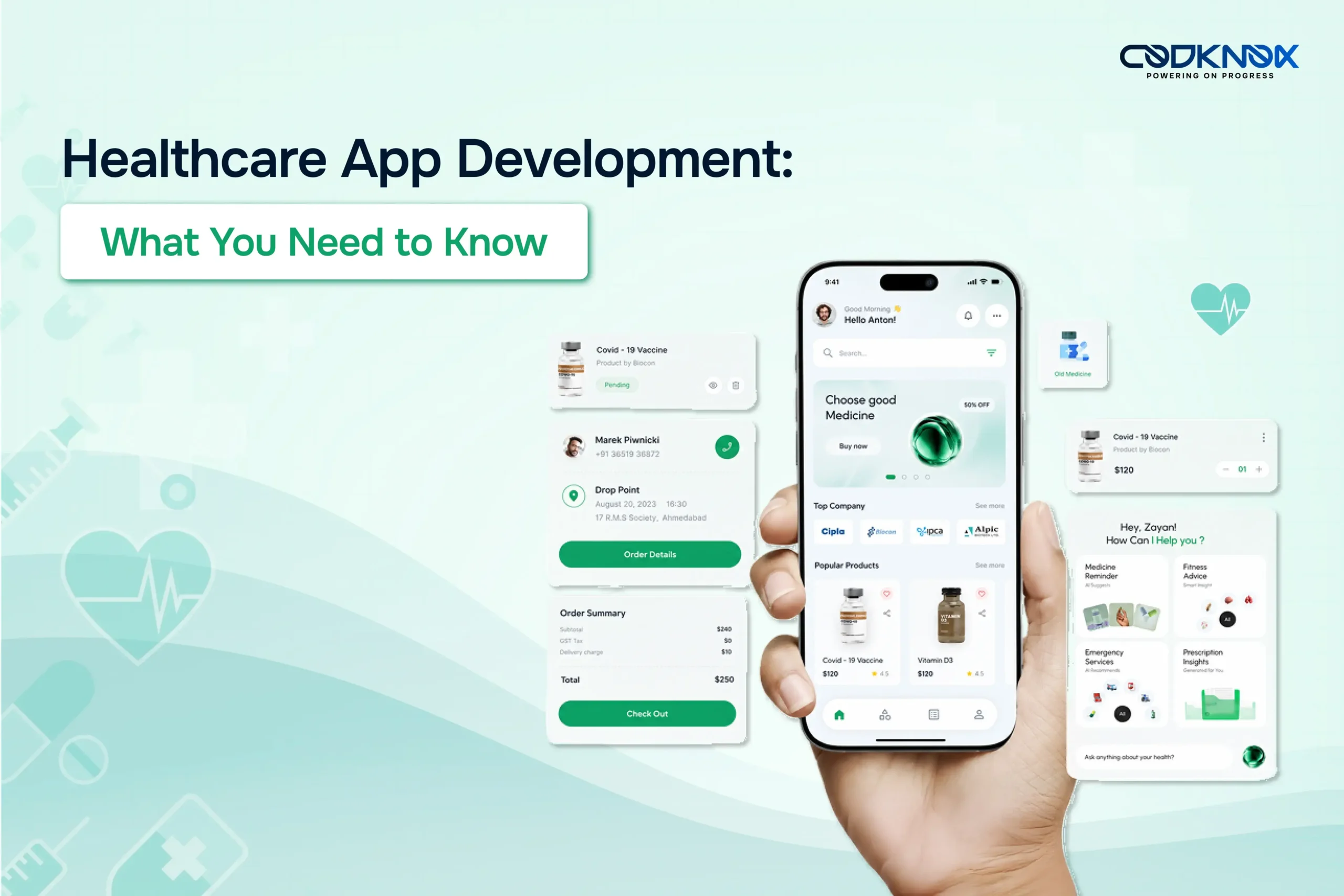
The healthcare industry is experiencing accelerated implementation of technology in the present time, and mobile apps have proved themselves useful in this scenario. No matter if it is about making appointments, telemedicine, or monitoring the health conditions of patients, everything is getting better due to healthcare applications. But how do healthcare companies and organizations provide an uninterrupted, secure, and personalized experience for their customers in this highly connected environment?
As per the statistics presented by Fortune Business Insights, the market size of global mHealth apps was valued at USD 40.65 billion in 2025 and is expected to rise from USD 45.14 billion in 2026 to USD 113.2 billion in 2034, indicating a CAGR of 11.80%.
This healthcare app development guide is all about the process of developing a healthcare application, covering such aspects as its features, regulations, development, technologies involved, and cost estimation.
Why Healthcare Apps Matter Today
The development of healthcare applications closes the gap between doctors and patients. It provides patients with convenient access to various healthcare services and helps healthcare establishments improve their internal processes. Moreover, the development of artificial intelligence, cloud computing, and wearables stimulates further improvements in this field.
Today, health app development is not only about developing a digital product anymore. Instead, it focuses on delivering secure, user-friendly, and reliable healthcare experiences that improve patient outcomes.
How to Build a Healthcare App Successfully
If you are wondering how to build a healthcare app, the process starts from knowing who your target audience is and what business objectives you are going to achieve. Prior to coding, think about the actual healthcare problem your software will address.
For example, your app may focus on:
- Telemedicine consultations
- Appointments scheduling
- Maintaining electronic health records
- Taking medication reminders
- Monitoring physical activity and fitness level
- Tracking patients remotely
Once you understand your goal, you’ll be ready for the next steps.
How to Develop a Healthcare App? A Step-By-Step Process
An organized healthcare app development process will minimize possible hazards and guarantee that you get a quality app. Here are the main steps in this process:

- Market Research and Requirement Analysis
First, perform thorough market research. Study the competitive environment, needs of patients, legal aspects of healthcare, and technological trends.
- UI/UX Design
The next step involves designing an intuitive interface. Since healthcare applications are intended for fast information search, their layout should be clear and easy to use.
- App Development
Once the design is approved, developers start programming the app. This step includes both front-end and back-end development along with integration of needed APIs.
- Testing and Quality Assurance
Testing helps verify that the app works correctly on different operating systems. It’s especially important in healthcare applications due to the personal information they have to deal with.
- Deployment and Maintenance
Finally, roll out the app onto platforms where it’s going to be used, as well as keep track of its performance and make updates.
Smart & Advanced Healthcare App Features
In recent years, many modern healthcare applications have embraced advanced technologies that improve patient experience and healthcare delivery processes. In cases where the features of a successful health app are effectively implemented, they can increase the value of a healthcare application.

- AI-Powered Insights
The use of artificial intelligence within healthcare apps ensures that patient data is analyzed and insights generated. The insights from the patient data can be used by clinical staff to provide appropriate services to patients.
- Voice-Enabled Interfaces
Features within an application that allow users to interact with the healthcare applications using their voice. The features help elderly people and doctors make quick decisions when in contact with the patients.
- Real-Time Health Coaching
These features ensure that personalized and timely health advice is provided based on patient data. They assist patients to adopt healthy lifestyles that will ensure good health.

- Wearables & EHR Integration
Using the functions of applications that link wearable technologies and EHRs enables clinicians to track the health parameters of patients in real-time. It helps clinicians to make well-informed decisions using reliable information on patient health status.
Importance of Healthcare App Compliance
One of the most crucial things that have to be ensured when developing an application is healthcare app compliance. As the name suggests, health care apps contain personal data related to the patient and, thus, should comply with specific requirements.
This may include complying with one of the following frameworks, depending on the region:
- HIPAA (United States)
- GDPR (European Union)
- HITECH regulations
- Local healthcare data protection laws
Compliance helps protect patient privacy, reduce legal risks, and build trust. Moreover, implementing strong encryption, secure authentication, and access controls strengthens overall security.
Choosing the Right Healthcare App Technology Stack
Choosing a suitable healthcare app technology stack is essential for scalability, security, and functionality.
Common technologies include:
- Front-End Technologies
- React Native
- Flutter
- Swift for iOS apps
- Kotlin for Android
Back-End Technologies
- Node.js
- Python
- Java
- .NET
Database Solutions
- PostgreSQL
- MongoDB
- MySQL
Cloud Platforms
- AWS
- Microsoft Azure
- Google Cloud
In determining the technology stack for developing health apps, companies should consider security, compatibility, scalability, and regulatory requirements.
Healthcare App Development Trends
The future of healthcare mobile app development is changing fast as service providers embrace digital-first healthcare service delivery. Below are some of the most common trends in today’s healthcare app development.

- AI-Driven Clinical Support
Modern healthcare apps incorporate AI into their operations in a bid to improve clinical decision support, automate data analysis and detection of possible health risks. When done right, AI can make diagnosis easier and reduce workload on healthcare professionals.
- Remote Care & Continuous Monitoring
Remote care and continuous monitoring applications for patients continue to emerge, thus helping healthcare professionals monitor their patients’ condition outside of clinical environments. Interoperable with wearable technology and other connected devices, these platforms allow collecting data continuously and providing proactive care.
- Interoperability & Data Integration
Data sharing within various healthcare IT systems has become increasingly important. Mobile applications developed using interoperability standards like FHIR facilitate better collaboration among EHR systems, third-party platforms, and connected devices.
- Security-First Development
Since cyberattacks on health records are becoming more frequent, cybersecurity becomes the main priority in the development of applications in the industry. Healthcare applications today use advanced cybersecurity measures such as robust encryption, access control measures, and continuous monitoring.
Thus, businesses interested in digital health app development have several advantages that make such investments worthwhile.

Cost to Build a Healthcare App
The cost to build a healthcare app will depend on various factors, including complexity, technology used, functionalities, requirements for compliance, and the geographic location in which the product will be developed.
Typical cost considerations include:
- UI/UX design
- Development resources
- Security implementation
- API integration
- Testing & quality assurance
- Maintenance cost
Basic applications will have a relatively low development cost, whereas advanced platforms that integrate AI and telemedicine services can demand significantly larger budgets. Therefore, businesses should define clear requirements before estimating costs.
Benefits of Custom Healthcare App Development
Each healthcare entity operates with unique needs that need to be catered for. For this reason, many organizations opt for custom healthcare app development.
The following are the benefits:
- Customized functionalities
- Better scalability
- Advanced security features
- Easy integration with other systems
- Patient-friendly interfaces
Additionally, a custom solution makes it easier to meet the changing organizational needs.
Conclusion
Developing a successful healthcare application entails careful planning, understanding of the legislative acts involved, a focus on users, and appropriate technological expertise. Using the holistic framework in healthcare app development ensures that the application is both safe and complies with all legislative acts.
At Codknox, we specialize in developing innovative healthcare apps according to clients’ unique requirements. From development of health apps and healthcare mobile apps to digital healthcare innovations, Codknox aims at providing innovative solutions with regulatory compliance and solid user experience.
Frequently Asked Questions (FAQs)
Q1. How can a healthcare mobile app be made?
A healthcare app should be created by identifying the needs and compliance considerations, after which one develops the features, designs a user-friendly interface, and uses appropriate technologies.
Q2. Why is healthcare app compliance important?
Adequate compliance is necessary for health app creation as it protects the patient’s information from being tampered with. Additionally, it ensures that there are no possible legal problems that may arise due to the use of the application.
Q3. What technologies are involved in health app creation?
Popular technology stacks for healthcare app development include React Native, Flutter, Node.js, Python, PostgreSQL, Amazon Web Services, and Microsoft Azure.
