
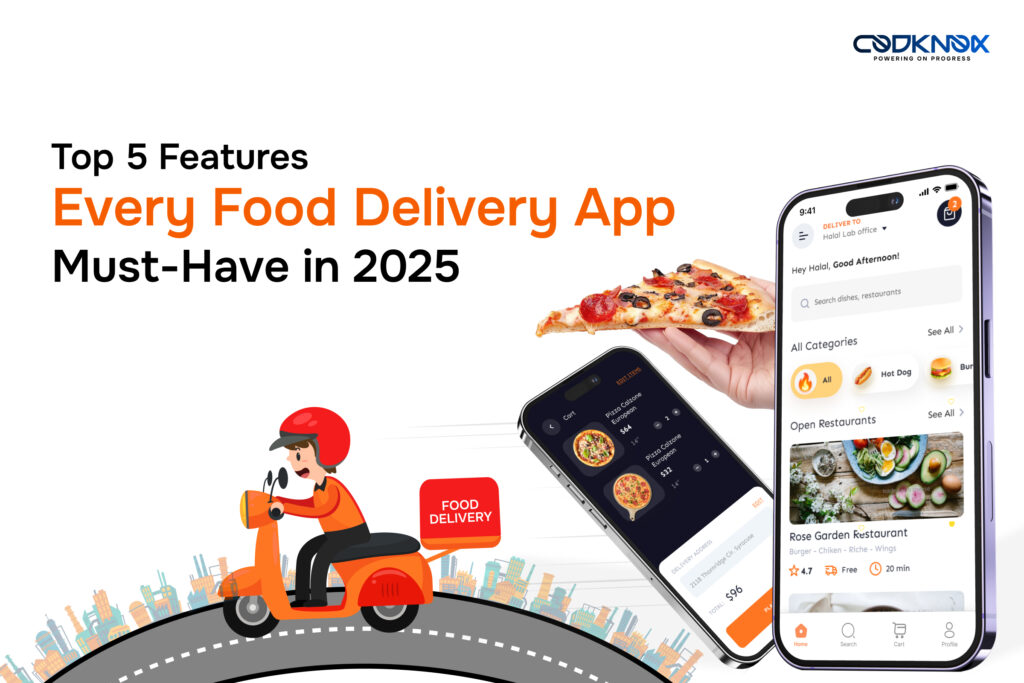
Top 5 Features Every Food Delivery App Must-Have in 2025
There has been a significant rise in the demand for doorstep food delivery since the pandemic. Though it’s been a few years since it ended, most people seem to stick to ordering food online. This customer need has pushed many businesses to build food delivery apps. This is mainly due to multiple factors like an increase in smartphone users, internet usage, and changing customer preferences. According to studies, the global online food delivery market is expected to cross the 1 trillion mark in 2025! This rapid growth has made the on-demand food delivery app a booming sector. Over 60% of customers now prefer ordering their food online instead of going to a restaurant. In 2025, consumer expectations are higher than ever. They expect more than food delivery; they want to be included and want to have the highest user experience. Now, if you are a business planning to launch or upgrade a food delivery app, you must understand which features are must-haves! In this blog, we’ll explore the top 5 features that are no longer optional. These features serve as the pillar that either makes or breaks an app’s success in today’s competitive landscape. Top 5 Essential Features Your Food Delivery App Needs in 2025 1. Real-time Order Tracking and ETA Updates People nowadays want to know it all! They want to know where their food has reached and how long will it take for the food to arrive. Real-time order tracking is a significant feature on which you can’t afford to compromise. It is the most requested feature by users, and in 2025, it is considered a standard. Real-time tracking acts as a communication point between all three parties- customers, business, and delivery partner. Moreover, it provides control over the customers. Your customer wants transparency, they wish to know what’s happening with their deliveries. And as a food business that aims to make a profit, you have to offer this feature to earn their trust and loyalty. If you miss out on this important feature, more than 60% of target consumers might consider looking for another service provider. How does Real-time Tracking work? The real-time tracking feature relies on GPS integration in a mobile app. The app connects a user with the delivery executive’s live location and displays the status on the user interface. The backend algorithms calculate the estimated time of arrival (ETA) based on current traffic, distance, and food order preparation time. All this happens at once. 2. Secure Payment Option This feature is paramount not just for food delivery apps but for every app existing on the face of the earth. In 2025, every app that offers a service will come with a payment gateway. A flawless checkout process is crucial. If consumers face payment issues or do not see their preferred mode as an option, they’re likely to abandon the cart. Food apps must support a wide variety of payment options. You can join hands with reputable payment gateways to offer a secure transition environment to users. Your business commitment to offer flexible and safe payment solutions instills confidence in consumers and establishes your app as a reliable source. How to Ensure Data Protection? To ensure maximum data security, choose a food delivery development company that offers high-end services. Developers who can implement end-to-end encryptions, tokenization, and secure APIs in your app’s payment system. Moreover, integrate the finest fraud detection tools to ensure that both users and businesses are protected from any suspicious transactions. 3. Easy-to-Navigate Menu Display Another fundamental feature for your food delivery business is a user-friendly menu display. Incorporate well-defined categories such as main courses, desserts, fast food, pizza, or more. This makes it super easy for consumers to navigate and find what they are searching for. Ask your partner web designers to include visually appealing food images, detailed product descriptions, and clear pricing for each menu item. Here are other essential features to include: 1. Recommended Food Section Showcase top-rated dishes loved by users to help others pick the best bites. 2. Search & Filter Users should find what they are searching for within seconds after logging into the app. Smart search and filters make that possible. This feature boosts conversion rates by taking the load from consumers to make a decision. Additionally, customized recommendations based on users’ past orders, location, and browsing behavior create a more engaging experience. 3. Easy Cart Functionality Integrate easily accessible buttons when you build a food delivery app. The buttons should be next to each menu item so that users can add items with a single tap. 4. AI-Powered Demand Forecasting and Order Management AI-powered demand Forecasting leverages machine learning algorithms to predict future food delivery trends based on historical data, customer behavior, weather patterns, and local events. This intelligent system helps restaurants and delivery platforms anticipate order volumes, optimize inventory, and allocate resources more efficiently. By forecasting peak hours and popular dishes, businesses can reduce food wastage, avoid stockouts, and improve delivery speed. It also aids in workforce planning by ensuring the right number of delivery personnel are available when demand surges. Overall, AI-driven forecasting leads to smarter operations, cost savings, and a better customer experience through improved service reliability. Be sure to include this advanced feature when you create a food delivery app- it can enhance user experience and improve operational efficiency. 5. Integrated Delivery Partner Management System An often overlooked but crucial component is the system that manages delivery agents. For food to arrive on time, a smart backend is required that handles assignments, tracks performance, manages availability, and routes orders efficiently. In 2025, apps with a strong delivery management system are outperforming those without it. What It Should Include Real-time assignment of orders to nearby delivery partners. Availability status (online/offline, break time). Heat maps showing areas with high demand. Route optimization based on traffic and distance. Conclusion We have learned that in 2025, developing an on-demand food delivery app in New York, USA, demands more than just listing restaurants and
How Much Does It Cost to Build a Pickup and Delivery App?
Today, on-demand pickup and delivery apps have become essential tools for businesses aiming to meet consumer expectations for swift and efficient services. Whether you’re a startup or an established enterprise, understanding the costs associated with developing such an app is crucial. This comprehensive guide will break down the factors influencing the cost, provide market insights, highlight the top features of a successful app, and explain why partnering with a top on demand pickup and delivery app development company in New York is essential. Market Insights from the US On-Demand Delivery Industry The on-demand delivery market in the U.S. is witnessing exponential growth, driven by changing consumer behavior and advancements in mobile technology. U.S. Last-Mile Delivery Market: According to Grand View Research, the global last mile delivery market was valued at $132.71 billion in 2022 and is expected to grow at a CAGR of 8.8% from 2023 to 2030. (Source) Food Delivery Market: Statista projects that the global online food delivery market will reach $1.40 trillion in revenue by 2025. (Source) E-commerce Delivery Services: Grand View Research reports that the global e-commerce logistics market was valued at $315.82 billion in 2022 and is expected to grow at a CAGR of 22.3% from 2023 to 2030. (Source) These numbers indicate a thriving industry with huge opportunities for businesses looking to invest in on-demand pickup and delivery app development. Factors Influencing the Cost of Building a Pickup and Delivery App 1. App Complexity and Features The complexity of your app significantly impacts development costs. A basic app with essential features like user registration, order placement, and tracking will cost less than an advanced app incorporating real-time analytics, AI-driven recommendations, and multi-language support. Each additional feature increases the development time and resources required. 2. Platform Selection Deciding whether to develop your app for iOS, Android, or both platforms affects the overall cost. Developing for both platforms simultaneously (cross-platform development) can be more cost-effective than building separate native apps but may come with trade-offs in performance and user experience. 3. UI/UX Design An intuitive and engaging user interface is vital for user retention. Investing in quality UI/UX design ensures a seamless user experience but can increase development costs. Complex designs with custom animations and interactive elements require more development time. 4. Development Team’s Expertise and Location The cost of hiring a development team varies based on their expertise and geographical location. For instance, partnering with a top mobile app development company in New York may entail higher costs compared to teams in regions with lower living expenses. However, experienced developers can deliver a more polished product efficiently. 5. Backend Infrastructure and Third-Party Integrations A robust backend is essential for managing user data, processing orders, and ensuring smooth app performance. Integrating third-party services like payment gateways, mapping services, and notification systems can add to the development cost but enhance functionality. Estimated Cost Breakdown While costs can vary widely based on the factors mentioned, here’s a general breakdown of the estimated expenses involved in developing a pickup and delivery app: Note: These figures are approximate and can vary based on specific project requirements and the development team’s rates. Which Businesses Can Benefit from an On Demand Pickup and Delivery App? A well-built pickup and delivery app can benefit a wide range of industries. 1. E-commerce & Retail With online shopping booming, businesses need seamless logistics to ensure timely deliveries. A pickup and delivery app enables e-commerce platforms and retail stores to manage order fulfillment efficiently, track shipments in real time, and offer customers flexible delivery options. This improves customer satisfaction and reduces cart abandonment rates. 2. Food & Beverage Industry Whether it’s a high-end restaurant, a fast-food chain, or a cloud kitchen, food businesses must ensure quick and hassle-free deliveries to retain customers. A robust delivery app allows them to accept online orders, manage delivery personnel, and provide real-time tracking, ensuring fresh and timely food delivery. 3. Grocery & Supermarkets The demand for online grocery shopping has surged, making it essential for supermarkets and grocery stores to offer fast and reliable delivery services. A pickup and delivery app helps streamline order processing, optimize delivery routes, and provide real-time tracking, ensuring groceries reach customers at their convenience. 4. Courier & Logistics Services Logistics companies and courier services can significantly enhance efficiency with automated scheduling and tracking features. A pickup and delivery app enables businesses to optimize routes, reduce delivery time, and offer customers live tracking updates, improving transparency and trust. 5. Laundry & Dry Cleaning Services Laundry and dry cleaning businesses can elevate their customer experience by offering convenient pickup and delivery services. An app allows users to schedule pickups, receive status notifications, and track their laundry’s progress in real time, making the entire process hassle-free. 6. Medical & Pharmacy Services In an era where quick access to medicines is crucial, pharmacies and medical supply businesses can use a delivery app to bring essential healthcare products directly to customers. Features like e-prescription integration, contactless payments, and real-time tracking enhance safety and convenience. 7. Home Services From furniture rental and appliance repairs to pet grooming and maintenance services, home service businesses can benefit from a dedicated pickup and delivery app. Customers can schedule services at their convenience, track service professionals in real time, and receive updates, leading to a seamless customer experience. If your business relies on delivering goods or services to customers, investing in a pickup and delivery app can improve customer satisfaction and boost revenue. Build Delivery App with Top Features for a Winning Solution A successful pickup and delivery app must be equipped with user-friendly functionalities that ensure seamless order placement, real-time tracking, efficient route optimization, and smooth payment processes. Below are the essential features categorized into three main sections: User Panel, Driver Panel, and Admin Panel. 1. User Panel (Customers) The user panel is the front-facing section of the app that allows customers to place orders, track deliveries, and manage their transactions effortlessly. A well-designed user panel enhances the customer experience and encourages repeat
Building an On-Demand Service App with AI Integration: A Step-by-Step Guide
Welcome to the future, where AI and on-demand services are teaming up like peanut butter and jelly! Whether you’re dreaming of the next Uber, TaskRabbit, or an app that delivers midnight ice cream, this guide will walk you through the ins and outs of building an AI-powered on-demand service app. Let’s dive in! Why AI in Mobile App Development is a Game-Changer AI is more than just a catchphrase; it is the magic ingredient that can transform your app from “meh” to “wow!” The following explains why incorporating AI is obvious: 1. Predictive Analytics: AI can analyze vast amounts of user data in real-time to predict behavior, needs, and future trends. This helps businesses proactively offer services rather than just reacting to user actions. Imagine an app that knows you’ll want coffee before you even think about it—pure magic! 2. Personalized User Experience: AI enables hyper-personalization by analyzing user preferences, past interactions, and behavior. This means users get recommendations and services tailored specifically to them. Think of Netflix knowing exactly what you want to watch next, but for everything from food delivery to personal shopping. 3. Automated Customer Support: AI-driven chatbots and virtual assistants are game-changers in customer service. They can handle common queries, process transactions, and even troubleshoot minor issues, all without human intervention. This ensures 24/7 support, faster responses, and happier customers. 4. Enhanced Security: AI-driven security systems can analyze patterns and detect fraud faster than traditional methods. From facial recognition to biometric authentication, AI is strengthening app security by preventing unauthorized access, phishing attempts, and suspicious activities. 5. Smarter Recommendations & Search Results: AI-powered algorithms improve search functions, making them more intuitive. Instead of generic search results, AI understands the user’s intent and offers highly relevant suggestions. A food delivery app, for instance, could suggest meal options based on weather conditions, past orders, and time of day. 6. Voice & Image Recognition: AI enables voice assistants and image recognition features that make navigation seamless. Instead of typing, users can say, “Book me a taxi,” and AI will handle the rest. Similarly, apps like Google Lens use AI to recognize objects and provide real-time information. 7. Efficient Operations & Logistics: AI can optimize delivery routes, manage inventory, and allocate resources efficiently. Companies like Amazon and Uber leverage AI to streamline their logistics, ensuring faster deliveries and better service quality. Source Step 1: Find Your ‘Aha!’ Idea Before you start building, you need a killer concept. Ask yourself: What problem does your app solve? Whether it’s faster food delivery, easier transportation, or a personal assistant on the go, your app needs to address a real-world problem that people face daily. Conduct market research, read reviews of existing apps, and see where users are frustrated. That’s your golden ticket! Who is your target audience? Are you catering to busy professionals, college students, stay-at-home parents, or all of the above? The more you know about your users, the better you can tailor your app to their needs. Consider demographics like age, location, interests, and spending habits. How can AI enhance the experience? AI can elevate your app by making it more intuitive, efficient, and engaging. Here are some ways AI can transform your on-demand app: AI-powered personalization: Recommend services based on user behavior. Smart scheduling: Optimize appointment booking and availability. Automated chatbots: Provide instant customer support. Voice & image recognition: Enable hands-free operation. Pro tip: Look for niches that haven’t been saturated. Maybe there’s no AI-powered dog-walking app that also schedules vet visits. Just saying. The more unique and innovative your idea is, the higher the chances of success. Step 2: Choose the Right On-Demand App Development Company in New York If you’re in New York and need a team that’s as passionate about on-demand app development as you are, CodKnox has got your back. We specialize in AI-powered mobile app development and know how to make an app that stands out in the crowded marketplace. Step 3: Map Out Your Features An AI-powered on-demand app should have: Smart Matching: AI connects users with the best provider/service based on their preferences. Chatbots & Virtual Assistants: For answering FAQs and handling bookings like a pro. Dynamic Pricing: AI adjusts prices based on demand (think Uber surge pricing but smarter!). Voice & Image Recognition: Why type when you can just say, “Book me a plumber now”? Real-time Tracking & Predictive ETAs: Because nobody likes guessing when their service provider will show up. Source Step 4: Pick the Tech Stack (The Geeky Part) Your app needs a solid backend to handle all that AI magic. Here’s a quick rundown: Choosing the right tools ensures your app is scalable, reliable, and ready to handle whatever comes its way. Step 5: Develop, Test, Repeat Once development kicks off, testing becomes your best friend. Remember: Continuous Testing: Regularly test new features to catch bugs early. User Feedback: Incorporate feedback to make improvements. AI Training: The more data your AI processes, the smarter it gets. A/B Testing: Experiment with different features and UI layouts to see what works best. Performance Optimization: Ensure your app runs smoothly across different devices and platforms. Security Checks: Regularly test for vulnerabilities and ensure user data is protected. Step 6: Launch & Market Like a Pro A killer launch strategy includes: Beta Testing: Let real users give feedback before the big launch. App Store Optimization (ASO): Use keywords, catchy descriptions, and top-tier visuals. Influencer & Social Media Marketing: Create buzz around your app. AI-powered Customer Support: Ensure users get instant help post-launch. The Final Take Building an AI-powered on-demand app isn’t rocket science (unless you’re building an app for space travel!). With the right idea, the right on-demand app development company in New York (cough ‘CodKnox’ cough), and the right AI features, your app can become the next big thing. Ready to build the future? Let’s chat! Codknox, your go-to AI application development company, is here to bring your vision to life.
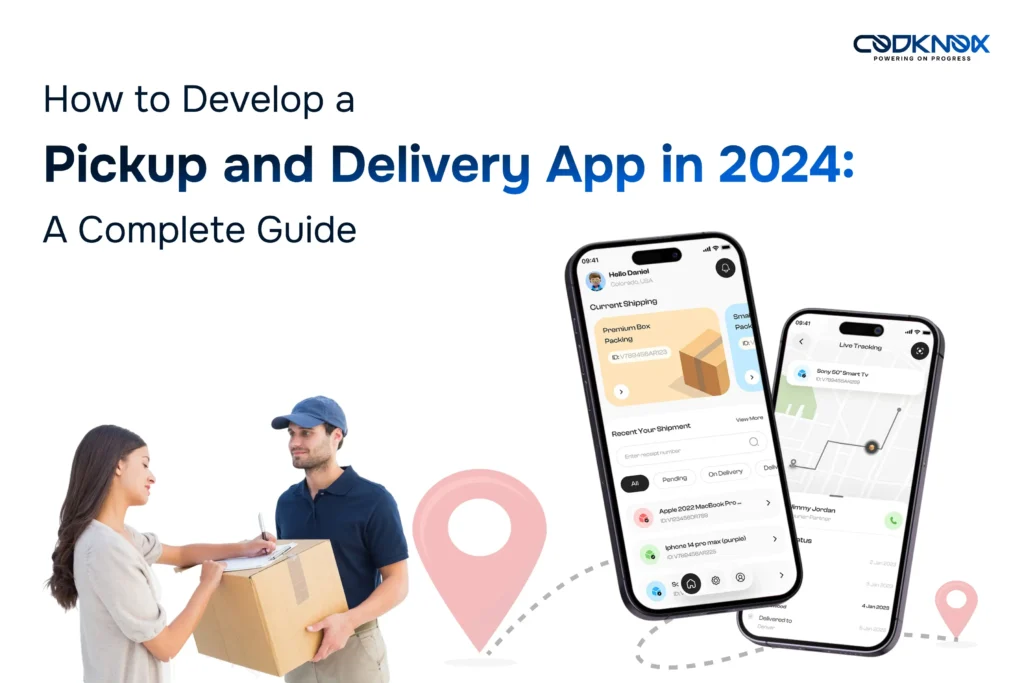
How to Develop a Pickup and Delivery App in 2024: A Complete Guide
In today’s fast-paced logistics landscape, the demand for efficient pickup and delivery services is surging. As we move into 2024, the need for seamless, technology-driven solutions is more apparent than ever. For entrepreneurs looking to capitalize on this trend, now is the ideal time. However, it’s crucial to understand the development process and associated costs before investing. This blog will guide you through the steps of developing a robust pickup and delivery app and provide insights into the expected expenses. Let’s get started! Build Your Own On-Demand Pickup & Delivery App Follow these steps to create an on-demand pickup and delivery app that stands out: Step 1 Validate Your Concept Before starting development, conduct thorough market research. Understanding your competition and the opportunities for success is crucial. Based on this information, decide if developing a delivery app aligns with your business goals and customer demands. Step 2 Define Your Business Model Different business models for delivery apps come with unique monetization strategies: Delivery Services: Connect restaurants and customers, charging establishments for platform use and retaining a commission on each order. Third-Party Facilitation: Connect restaurants and customers with third-party delivery services, with your app acting as an intermediary. Direct Delivery: Enable restaurants or stores to manage their internal order fulfillment, charging customers directly. Step 3 Hire a Software Development Partner Choose between assembling an in-house team, working with freelancers, or outsourcing to a reputable app development company. Outsourcing is often more cost-effective and reliable. Review the portfolio and experience of potential partners thoroughly. Step 4 Choose the App Features Select features that align with your business model. For a restaurant delivery service, prioritize a menu system. Consult with professionals to determine the best features for your app. Step 5 Design and Develop Your App Share your ideas and make adjustments as needed while the development team works on your app. Once the design is finalized, the development process begins. Step 6 Run Active Testing Sessions Thorough testing ensures your app functions seamlessly across devices and platforms. Conduct tests on iOS, Android, tablets, and web browsers to deliver a smooth user experience. Step 7 Conduct Marketing and Launch Increase your app’s visibility by launching on the Apple App Store and Google Play Store. Use marketing strategies like promoting on your website, in-store flyers, email marketing, and social media campaigns to drive downloads and generate interest before the launch. Technology Stack for Building a Pickup & Delivery App A successful pickup and delivery app requires a seamless backend, engaging frontend, and efficient data management. Here are key technologies to consider: Programming Languages: React Native, Flutter, Kotlin, Java Backend Development: Node.js, Express.js, MongoDB, Nginx, Sockets Frontend Development: ReactJs, Material UI Third-party APIs: Twilio SMS, Google Maps User Registration: Google Sign-In, Facebook Login SDK Payment Integration: Stripe, Square, PayPal, Google Wallet, WePay Restaurant Listing: Foursquare API, Grubhub API, Yelp Fusion API Analytics: Google Analytics, Localytics, Apple Analytics Mapping and Locations: Google Maps, OpenStreetMap, Mapbox, Mapkit JS An experienced development company like Codknox can integrate these technologies to create a custom app tailored to your business needs. How Much Does It Cost of Developing a Pickup and Delivery App The cost of app development varies based on features, complexity, design, and the development team. Here’s an average cost breakdown: Planning and Analysis: $1,000 – $5,000 Design: $5,000 – $15,000 Front-end Development: $10,000 – $30,000 Back-end Development: $20,000 – $50,000 Testing and Quality Assurance: $5,000 – $15,000 Deployment and Maintenance: $10,000 – $20,000 On average, developing a pickup and delivery app can cost between $51,000 and $135,000. These estimates are based on development in New York, USA. Conclusion Developing a pickup and delivery app requires an efficient coding strategy and optimal resource utilization. Many business owners face challenges in the initial stages of development. Partnering with a reliable on-demand pickup and delivery app development company like Codknox can help. Codknox prioritizes understanding your business requirements to deliver tailored, scalable, and cost-effective digital solutions. To learn more, schedule a call with our professional experts today! Frequently Asked Questions (FAQs) Q1. How long does it take to develop a pickup and delivery app? The development time typically ranges from 6 to 10 weeks, depending on the complexity of the features, the development team’s efficiency, and the overall project scope. Q2. What technologies are used in developing a pickup and delivery app? Key technologies include programming languages like React Native or Flutter, backend frameworks like Node.js, databases like MongoDB, and APIs for mapping and payment integration such as Google Maps and Stripe. Q3. How much does it cost to develop a pickup and delivery app? The cost can range from $51,000 to $135,000, depending on factors like app complexity, features, design, and the development team’s location and expertise. Q4. What is the process of launching a pickup and delivery app? The process includes finalizing the app design and development, conducting thorough testing, deploying the app to app stores (Apple App Store and Google Play Store), and executing marketing strategies to attract users. Q5. How do I choose the right development partner for my app? Look for a development partner with experience in building similar apps, a strong portfolio, positive client testimonials, and a clear understanding of your business needs. Evaluate their technical expertise and approach to ensure they align with your project goals.