
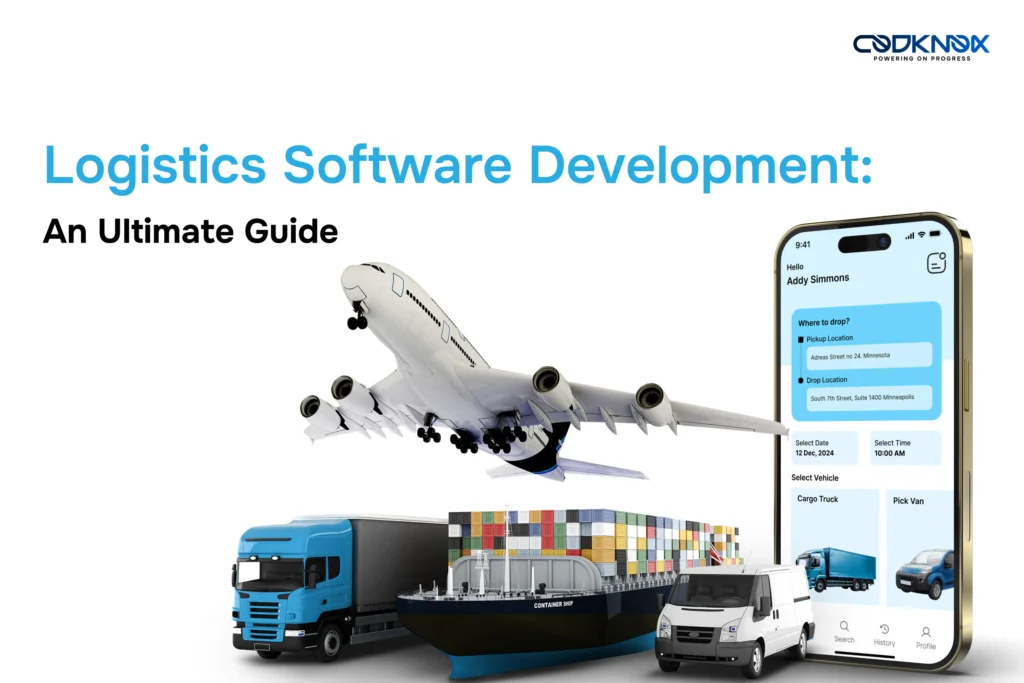
Logistics Software Development: An Ultimate Guide
In the modern digital economy, logistics is no longer just about moving goods from one place to another; it’s about doing so with precision, speed, and efficiency. With growing demand in B2B, B2C, and C2C sectors, businesses need innovative solutions to stay competitive. Logistics software development has emerged as a game-changer in the logistics industry, transforming traditional workflows into streamlined, data-driven processes. A well-designed logistics app improves operational efficiency and enhances customer satisfaction by offering real-time tracking, automated updates, and seamless communication. Whether managing a fleet, overseeing warehouse operations, or handling last-mile deliveries, a powerful logistics app can redefine how your business operates and scales. According to 75% of logistics company leaders, freight and logistics businesses that fail to prioritize digital capabilities risk putting their operations in jeopardy — Accenture Why Do Logistics Businesses Need Good Logistics Software Development? The logistics industry faces growing challenges, from managing complex supply chains to meeting rising customer expectations for speed and transparency. A robust mobile app system addresses these challenges head-on, offering tailored solutions that cater to the unique needs of logistics businesses. 1. Streamlined Operations Across Business Models Logistics companies operate in diverse models, including B2B, B2C, and C2C. A good mobile app integrates processes, ensuring smooth coordination between stakeholders. It simplifies tasks such as fleet management, delivery tracking, and inventory oversight, creating a seamless flow across all touchpoints. 2. Enhanced Customer Experience Today’s customers demand visibility and control. Real-time tracking, instant notifications, and easy communication provided by mobile apps help businesses build trust and loyalty. Features like proof of delivery and ETA updates further enhance the customer experience. 3. Real-Time Data for Smarter Decisions Mobile apps provide real-time data on orders, shipments, and warehouse operations, enabling businesses to make informed decisions. Whether it’s optimizing delivery routes or forecasting demand, actionable insights drive efficiency and cost savings. 4. Scalability for Business Growth As your business grows, so does the complexity of your operations. A scalable mobile app can accommodate increasing volumes, expand features, and adapt to market changes, ensuring your logistics operations remain efficient and effective. 5. Competitive Advantage State-of-the-art logistics software development can set your business apart in a crowded market. Offering technology-driven convenience and reliability positions your brand as an industry leader, attracting clients and partners. You can learn more business benefits by consulting a reputed app development company in New York. What Are the Different Types of Logistics Apps? Logistics operations involve multiple moving parts, from fleet management to warehouse coordination and last-mile delivery. To address these diverse needs, businesses can leverage specialized mobile apps designed to enhance efficiency, improve tracking, and ensure seamless communication. Below is an overview of the most essential types of logistics apps: Fleet Management Apps: Track, monitor, and manage your fleet in real time. Ensure optimized routes, reduced fuel consumption, and improved driver efficiency. Delivery Management Apps: Simplify last-mile delivery with real-time tracking, route optimization, and automated updates. Provide customers with accurate ETAs and enhanced service reliability. Warehouse Management Apps: Streamline inventory control, manage stock levels, and coordinate operations efficiently. Ensure precise tracking and seamless goods handling. All Logistics Business Models: Customized apps for B2B, B2C, and C2C logistics needs. Solutions include freight forwarding, courier services, and supply chain management. Essential Features of a Logistics App A comprehensive logistics app must cater to the needs of various stakeholders, including customers, delivery agents, and administrators while integrating seamlessly with web-based platforms for broader functionality. I. Features for Customers in a Logistics App A customer-focused logistics app should provide a seamless and intuitive experience, covering every step from registration to feedback. Below are the key features that enhance convenience and build customer trust. Registration and Profile Management: Simplify onboarding with quick registration options, such as email, phone number, or social media accounts. Allow customers to manage their profiles easily. Vehicle Selection: Enable customers to choose vehicles based on their specific needs, such as size, type, or cargo requirements, ensuring tailored services. Scheduling and Booking: Provide flexible scheduling options for booking deliveries or pickups, catering to both immediate and future requirements. Multiple Payment Gateways: Offer a variety of secure payment options, including credit/debit cards, digital wallets, net banking, and cash on delivery, to accommodate diverse customer preferences. Real-Time Tracking: Allow customers to monitor the live location and status of their shipment or vehicle, ensuring transparency and peace of mind. Notifications and Alerts: Keep customers updated with timely alerts about order confirmations, shipment dispatch, delivery status, and more through push notifications or SMS. Real-Time Charge Estimate: Provide instant cost calculations based on distance, weight, or type of service, ensuring transparency before booking. Access to Previous Bookings: Allow customers to view their booking history, including details of past orders, invoices, and payments, for easy reference. Ratings and Reviews: Enable customers to rate and review their experiences with the service, providing valuable feedback for service improvement. These features are essential for creating a user-friendly logistics app that prioritizes customer satisfaction and streamlines their journey from booking to delivery. II. Features for Delivery Agents in a Logistics App A customer-focused logistics app should provide a seamless and intuitive experience, covering every step from registration to feedback. Below are the key features that enhance convenience and build customer trust. Registration and Profile Management: Enable agents to register and manage their personal details and work preferences within the app. Request Management: Allow agents to accept or decline delivery requests with ease. Toggle for Service Availability: Provide a toggle option for agents to mark themselves as available or unavailable for new tasks. Consignment Details: Display comprehensive information about the consignment, such as package type, weight, and recipient details. Navigation: Offer GPS-based navigation to optimize routes and ensure timely deliveries. Mark Delivery: Allow agents to mark deliveries as completed, providing real-time status updates to customers and admins. Freight/Shipping Details: Provide detailed shipping or freight information, ensuring clarity about handling requirements. Access to Previous Services Delivered: Maintain a history of completed deliveries for easy reference and performance tracking. Partner with a trusted transportation software development
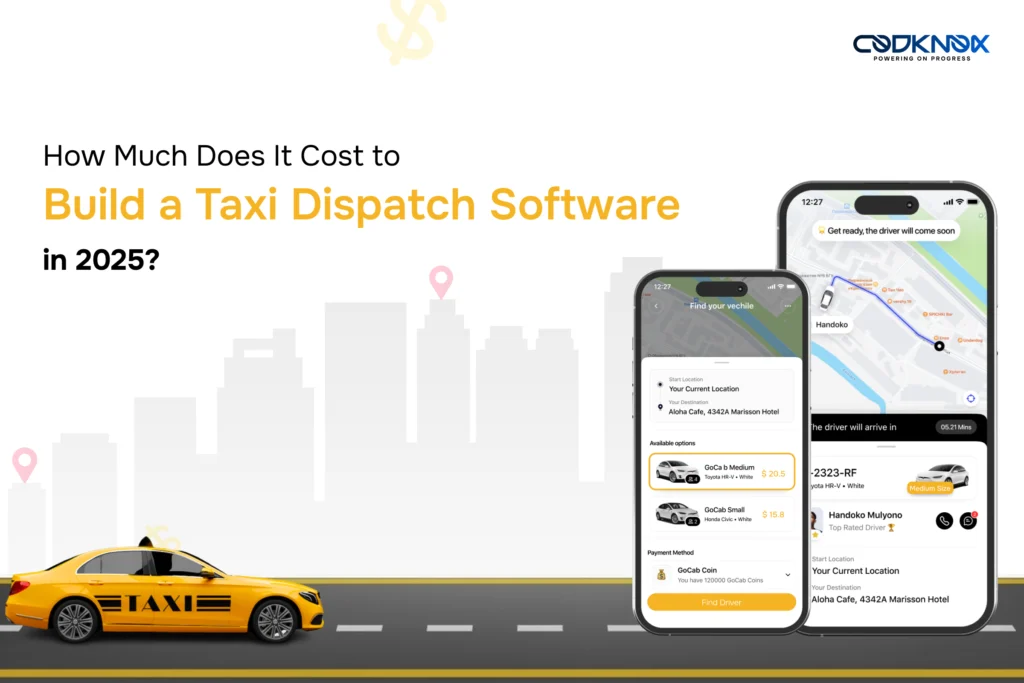
How Much Does It Cost to Build a Taxi Dispatch Software in 2025?
The need for creative and effective taxi booking apps is only going to increase as 2025 approaches. As technology advances and customer expectations change, companies are looking for more than just a simple ride-hailing service. With their cutting-edge features, intuitive user interfaces, and flexible offerings that serve both drivers and passengers, some of the top taxi dispatch software like Uber, Lyft, Ola, Bolt, and others continue to set the industry standard and act as models for companies wishing to expand their platforms. Understanding the cost structure is necessary to make an informed decision when developing a taxi booking app. Depending on whether you want a basic, off-the-shelf solution or a fully customized, feature-rich platform, costs can vary significantly. In this blog, we will explore the key factors that influence taxi app development cost in 2025. We’ll also provide a ballpark cost analysis to help you plan your budget more effectively, so you can make informed decisions that align with your business goals. Which Aspects of Taxi Mobile App Development Determine its Cost? 1. Features & Functionalities The cost of developing a taxi app is directly impacted by its complexity and feature count. While complex features like ride-sharing, AI-based suggestions, or real-time driver tracking can dramatically raise costs, basic features like ride booking and payment integration are more reasonably priced. 2. Custom Design Requirements A unique and visually appealing UI/UX design tailored to your brand ensures a standout user experience, but it comes at a higher cost than using standard design templates. Customizations require additional design hours and expertise, which can influence the overall budget. 3. Platform Choice Costs are significantly influenced by whether the software is designed for iOS, Android, or both. Compared to a single-platform program, developing for both platforms requires more time and resources, particularly if native development is preferred over cross-platform options. 4. Technology Stack Modern technologies like artificial intelligence (AI), machine learning, and cloud integration can improve the usefulness and scalability of apps, but they also frequently result in increased development costs because they require specific knowledge and tools. 5. Location of the Development Team The team’s location and whether they are in-house or outsourced have a big impact on the development cost. Although quality and experience should also be taken into account, teams in North America or Europe usually charge more than those in Asia or Eastern Europe. 6. Maintenance & Updates To keep the app functioning properly and competitive, post-launch maintenance is crucial. This includes routine upgrades, security patches, and bug fixes. The budget for app development must include these recurring expenses. 7. Accelerated Delivery Timelines If the app needs to be launched within a tight timeframe, additional resources and extended working hours are often required, which can increase development costs. This includes employing a larger team or using advanced tools to speed up the process. Codknox Offers White-Label Taxi Dispatch Software like Uber As a top taxi booking app development company in New York, Codknox is aware of how important speed to market is in the current competitive environment. For this reason, we provide White-Label Taxi Booking Apps, which are pre-made solutions that can be easily branded and altered to suit your particular business needs. With our white-label solutions, you can save time and money by launching your taxi booking app without having to go through the drawn-out development process. Codknox’s White-Label Taxi App includes a User App with a feature-rich interface for seamless ride booking, a Driver App equipped with tools for managing rides, routes, and earnings, and a robust Admin Panel offering a comprehensive dashboard to oversee operations and analytics. Additionally, the app can be customized with tailored features such as multi-currency support, real-time analytics, and other enhancements to suit your business needs. Why Choose Our White-Label Taxi Booking App? When it comes to launching your taxi booking app, a white-label solution offers the perfect balance of speed, customization, and competitive taxi app development cost. Our white-label taxi booking app is designed to help you get to market quickly while maintaining a high standard of quality and functionality. Understanding Taxi Booking App Development Pricing CodKnox offers flexible and transparent pricing to suit your needs. From cost-effective white-label solutions to fully customized apps with cutting-edge features, we deliver high-quality products tailored to your business goals. Below is a breakdown to help you estimate the investment required. The prices listed above are starting points and offer a general framework for estimating your taxi booking app development investment. However, it’s important to understand that the final taxi app development cost can vary greatly based on the level of customization you require. As the complexity of your app increases (whether through additional features, design adjustments, or tailored functionalities), the development costs will rise accordingly. For instance, adding specific preferences to improve the app’s performance and scalability, integrating customized systems, or choosing a more unique user experience will all demand extra time and resources during development. The effort, knowledge, and time needed to develop the app will increase with its level of specialization to match your business model, which will have a clear impact on the final cost. At Codknox, a trusted mobile app development company in New York, USA, we work closely with you to understand your business goals and ensure that the solution we provide is not only functional but also scalable. We provide transparent pricing and strive to offer the best value within your desired budget, regardless of how customized your app may become. Hire an Expert Taxi Booking App Development Company in New York Working with a seasoned and trustworthy app development company is essential to creating a successful taxi booking app in 2025 and making sure your platform satisfies user expectations as well as business objectives. You may get the technical know-how, business acumen, and strategic insights required to develop a high-performing, scalable, and user-friendly app by working with reputable taxi booking app developers. To make sure your app stands out in a crowded market, our team provides end-to-end
eCommerce App Development: 7 Ways to Reduce Cart Abandonment
Ah, the dreaded abandoned cart! It’s a real bummer for eCommerce businesses. Imagine spending hours building the perfect online store, only to have customers ditch their carts at the last minute. With nearly 70% of carts left behind (Baymard Institute, 2023), that’s a lot of “almost sales.” But don’t worry! As the best eCommerce development company in New York, USA your app can break the cycle finally. We need to understand the root causes and implement effective strategies for eCommerce app development to combat this. Why Does Cart Abandonment Happen? Source: Joint Research by Baymard and Statista Strategies that can Turn Cart Abandoners into Happy Shoppers 1. Make Checkout Faster Than a Cat Video Loading on WiFi Long, drawn-out checkouts are the ultimate cart killers. We have all been in a situation where you are almost ready to buy but the checkout process seems to go on forever. Did you know that conversion rates increased by 35% in 2023 just by streamlining checkouts (Baymard Institute)? What you should do: A streamlined checkout process is key to reducing cart abandonment. Minimize the number of steps. Ideally, it should take less than 5 steps. Keep the checkout form minimalist and focused. With today’s tech, customers want to zip through checkout like they’re ordering their morning coffee, not filling out a tax form. How about adding a progress bar? Give users that sweet dopamine hit of seeing just how close they are to snagging their item with a progress indicator. 2. Guest Checkout Because No Strings Attached Consider yourself at a checkout counter, and the cashier asks you to register an account before you can pay. Odds are, you’d leave, right? Forced account creation can feel like a hassle. You will notice fewer abandoned carts by offering a “guest checkout” option to your customers. What you should do: Get users through guest checkout and gently invite them to create an account after they’ve checked out. Consider a one-page checkout to further simplify the process. 3. Add Multiple Payment Options The one-size-fits-all approach is over. Customers want choices, and payment is no exception. If you only offer one or two payment options, you’re probably losing out on sales. What you should do: Offering more payment options is like having chocolate, vanilla, and strawberry at an ice cream shop. It just makes everyone happy. Expert eCommerce website development services know the importance of offering payment options like credit cards, digital wallets (like PayPal and Apple Pay), and even Buy Now, Pay Later (BNPL) to cater to more customers. Partner with a range of secure payment providers to support various payment options. Interestingly, BNPL options can increase conversion rates by allowing customers to spread out payments. Did you know that Juniper Research projects that between 2021 and 2026, consumer BNPL spending will nearly quadruple, rising 274%? Work with a seasoned custom mobile app development company in the USA, to build a captivating and fully functional online retail store. 4. Offer Mobile Optimization for a Smooth Ride on Any Device Two-thirds of online shopping orders are placed through smartphones, which accounted for about 77% of all retail site traffic worldwide as of the second quarter of 2024. (Statista) If your app isn’t as smooth on mobile as it is on desktop, you’re in trouble. Mobile shoppers are picky; if your buttons are tiny or pages are slow, they’ll bounce. What you should do: Ensure your site looks and functions flawlessly on all devices, offering a smooth mobile experience. Keep the buttons big and navigation clear. Make it easy for users to find what they need for intuitive navigation. The loading times should be lightning-fast to prevent impatient users from abandoning their carts. Optimize images, minimize code, and leverage browser caching. Do you want to know your eCommerce mobile app development cost? Our representative will help you. 5. Maintain Shipping Transparency Because Surprises are Fun Except When They’re Fees High shipping costs are a classic cart killer. Nobody wants to play Guess the Final Price! Customers don’t appreciate unexpected costs at the last step. 48% of users abandoned carts due to unexpected costs (Baymard Institute, 2023). Make sure your app isn’t one of them. What you should do: Make sure your shipping fees are transparent and, if possible, offer free shipping or set a minimum threshold to qualify. Be upfront about all fees, whether it’s shipping, handling, or service charges. Show them the full picture right from the start, and you’ll see fewer “back buttons” hit in frustration. Also, offer free shipping on orders over a certain amount to encourage larger purchases. It’s an incentive and a reward rolled into one! 6. Follow Up with Abandoned Cart Emails That Don’t Sound Like a Sales Pitch An abandoned cart email is a friendly reminder that brings customers back to finish their orders. The humble abandoned cart email is like sending a “Hey, don’t forget me!” message. What you should do: Strike while the iron’s hot by sending timely reminders to customers who abandoned their carts. The best ones keep it simple and warm and include the items left in the cart. Timing is everything; send the first reminder within 24 hours, then maybe a follow-up in 48 hours with a personalized discount or incentive to entice customers back. Keep it visual. Add images of the items left behind, a crisp message, and a friendly call to action: “Complete Your Purchase and Get 10% Off—We Miss You Already!” 7. Build Trust and Lay a Foundation of Confidence Imagine walking into a store where everything feels a little off. E-commerce customers are no different; they want to feel safe and confident while shopping online. Invest in trusted eCommerce website development services to build a reliable online store. What you should do: Trust badges from reputable security providers like Norton, McAfee, or your payment processor show customers they’re in safe hands. As a discreet reminder that you have got their security covered, proudly display these seals at checkout and even at
Choose the Right Mobile Application Development Company in New York
In the modern tech landscape brimming with talented developers, finding the best mobile app development company in New York, USA, can be as challenging as spotting a yellow cab on New Year’s Eve. Whether you’re cooking up the next social media sensation, a life-simplifying tool, an on-demand service solution, or a platform for gamers to unite, your project deserves a team with the right mix of tech-savvy, creativity, and reliability. Source: Market Research Future iOS, with a market size of $42.2 billion in 2022, shows steady growth, while Android is set to experience a more substantial surge, overtaking iOS by 2030. This data underscores Android’s dominant market trajectory, making it a key player for businesses and developers aiming to capture the mobile market in the coming years. With countless companies vying for attention and every developer claiming to be the best, how do you pick a team to help your app idea survive and thrive? By the end of this guide, you’ll have all the insider tips on choosing a team that brings the expertise, innovation, and collaboration you need to build a winning mobile application. 1. Define Your Needs Before Diving In Before you start looking for a development team, take some time to define exactly what you want from your app. What problem does your app solve? Who is your target audience? What features are essential for its success? Do you need it on iOS, Android, or both? Is this a basic app, or are you looking for custom integrations and advanced functionalities? Write down key points about your app’s purpose, target audience, and budget. Trust us this prep work pays off- saves you time and helps potential app developers in New York understand your project better. 2. Assess the Company’s Experience and Portfolio Not all companies have the experience or creativity you need. A company’s track record is a strong indicator of its capabilities. Check each company’s portfolio to see if they’ve handled projects similar to yours. Look for projects of app development in New York that showcase their ability to create visually appealing, user-friendly interfaces and robust functionalities. This reflects a developer’s understanding of both aesthetics and user experience. Pay attention to the complexity of their previous work and how well they’ve addressed challenges. 3. Evaluate Technical Expertise and Industry Knowledge Modern mobile apps are built on complex frameworks and updated technologies, from AI to augmented reality. Ensure that the company’s technical expertise isn’t just about coding; it’s also about staying updated with the latest tech trends, tools, and frameworks. A top company will know the latest advancements and offer insights on the best approach for your app’s specific needs. A company that understands your industry can provide valuable insights and ensure compliance. 4. Prioritize Communication and Transparency Your app is a huge investment, so you want a team that keeps you informed and involved every step of the way. Look for a company that values open and transparent communication. Discuss their project management methodologies, how they handle feedback, and their approach to collaboration. Look for mobile app developers in New York who respond quickly and keep you in the loop. Clear communication builds trust, making sure everyone’s on the same page from start to launch. 5. Balance Quality with Budget While budget constraints are natural, remember that you get what you pay for. While cost is important, prioritize quality and long-term value over short-term savings. Lower-cost development might sound appealing but could lead to compromises in quality. Instead, look for a mobile application development company in New York that offers transparent pricing and flexible payment options, like pay-as-you-go or milestone payments. 6. Evaluate the Development Approach, Focussing on Agile Methodology Effective project management can have a significant impact. Many successful companies from start-ups to large enterprises, use agile development, which offers flexibility and allows for adjustments along the way. This approach is perfect if you’re looking for iterative development, with feedback at every stage. Don’t hesitate to ask about their project management style. Teams with a well-defined approach keep things running smoothly, ensuring your app stays on schedule and within budget. 7. Check for Post-Launch Support and Maintenance Building an app isn’t just about launch day. Its success requires ongoing support and maintenance. Ongoing support for updates, bug fixes, and feature additions is essential. Inquire about the company’s post-launch services. A good mobile app development company will understand that as your users grow, so will your app’s needs. It will provide ongoing support to ensure your app’s continued success and address evolving business needs. Partner with the Best Mobile App Development Company in New York, USA Creating an app is a big deal, and we’re here to make it happen! We’re a team of passionate mobile app developers in New York who love building apps that stand out. With expertise in everything from design to post-launch support, we’re dedicated to creating mobile solutions that meet your unique needs. So, let’s talk. New York has plenty of developers, but there’s only one Codknox.
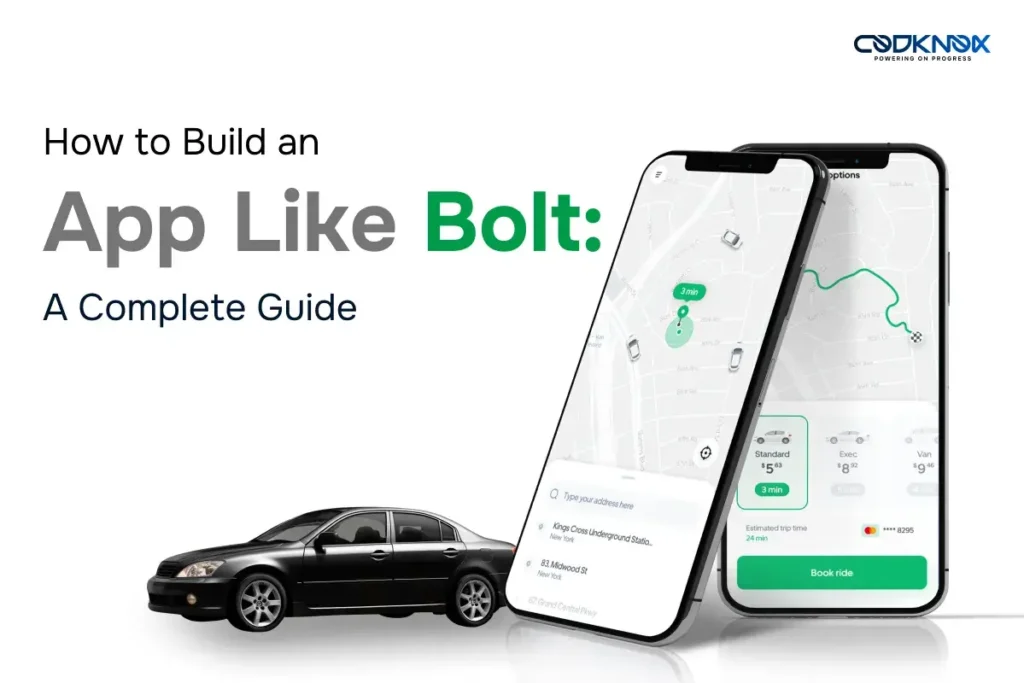
How to Build An App Like Bolt: A Complete Guide
With digitalization, services like Bolt have transformed the field of transportation by offering accessible, affordable ride ordering via mobile apps. Considering this transformation, it is expected that the ride-hailing industry worth $196.05 billion in 2021 will grow to $515.49 billion by 2030- growing 11.34% annually from 2022 to 2030. Thus, inspired by Bolt’s success, several entrepreneurs aim to enter this lucrative market with ride-hailing apps like Bolt. However, creating a successful ride-hailing app requires careful planning, market insight, and a focus on user satisfaction. It is essential to attract and retain customers while ensuring profitability. This guide provides an overview of the Bolt app, its necessary features, and the steps and costs of developing a similar app. It will enable you to create a successful app in no time. So, let us get started! What is the Bolt App? Bolt is an online cab booking app that enables users to book taxis or register as drivers. Similar to its competitors, Bolt utilizes GPS for efficient route planning, taxi availability, and destination mapping. Its distinctive advantage lies in its strong focus on safety and fairness for both drivers and customers. Which features should you incorporate in Your Bolt-like App? To develop a successful ride-sharing app like Bolt and ensure user satisfaction and operational efficiency, you should integrate these essential features: Multiple Vehicle Options: Offering a wide array of vehicle choices is a standout feature of Bolt-like apps. It will cater to diverse customer preferences and budgets. So, provide options from standard cars to luxury vehicles and ensure broad customer satisfaction and loyalty. Real-time Tracking: Integrating real-time tracking enhances transparency and safety for users. It allows customers to monitor their rides on a map in real time to get journey progress updates and driver location details. This will foster trust in your service. Cashless Payment: The convenience of cashless payments is pivotal in ride-sharing apps, eliminating the need for cash and streamlining transactions. Including cashless payment methods in your Bolt-like app will enhance the user experience by simplifying payments. It will also ensure financial security for both customers and drivers. In-app Communication: Seamless communication between customers and drivers via in-app chat or call features enhances the overall ride experience. It includes easy directions, pickup location changes, and real-time assistance, boosting customer satisfaction and retention. Loyalty Program: Implementing a loyalty program incentivizes repeat usage and cultivates customer loyalty. Rewarding frequent users with discounts, free rides, or exclusive perks encourages ongoing engagement with your Bolt-like app and fosters a sense of appreciation among customers. SOS Button: Incorporating an SOS button adds a layer of safety for users. This feature ensures user safety and facilitates quick response and assistance during emergencies. How Can You Create An App Like Bolt? Creating an app like Bolt, the all-in-one mobility app, can be exciting and rewarding. So, if you want to build something similar, you must follow the given steps: Step 1: Plan Things Properly Determine who will use your app. Talk to people, send out surveys, and check out competitors. Note what they do well and where they need to catch up. Understand what your potential users need and want. Next, find out what unique things your app can offer. It could be lower prices, better service, or cool new features. Step 2: Get Ready to Build Decide if you want to create the app for iOS, Android, or both. Tools like Flutter or React Native can help you build for both platforms simultaneously. If you’re not a developer, hire an app development team with similar project experience. Step 3: Define Key Features Identify the main features needed for your Bolt clone app. This includes user registration, ride booking, driver allocation, real-time tracking, secure payment processing, and a feedback system. You might also consider adding promotional offers and loyalty programs. Step 4: Select a Tech Stack Choose the right technology stack for your app, which includes programming languages, frameworks, and databases. The most common choices for ride-hailing apps are React Native or Flutter for cross-platform development, Node.js or Django for backend development, and MongoDB or MySQL for databases. Step 5: Work on Frontend and Backend Create an intuitive and user-friendly interface for both riders and drivers. Simultaneously, build a robust backend system to manage user authentication, ride-matching algorithms, GPS tracking, and payment processing. Implement secure APIs to ensure smooth communication between the front and back end. Step 6: Test and Launch Release a beta version to a small group of users. Collect feedback and make improvements. Test for speed and reliability, and run security tests to protect user data. Once testing is done, launch your app on the App Store and Google Play Store. Promote it through social media, ads, and partnerships. Step 7: Post Launch Once your app is in the market, use analytics tools to track user engagement and app performance. Fix any issues quickly. Also, keep your app updated with new features and improvements based on user feedback. How to Promote Your Online Cab Booking App? There are several ways to promote your ride-hailing app. Depending on your budget, you might find some options, such as: App Store Optimization: App Store Optimization (ASO) works like Search Engine Optimization (SEO). By carefully crafting your app’s descriptions, titles, and tags to match common searches, you increase the chances of your app being found by your target audience. Google Search Ads: Pay-per-click (PPC) ads are widely used to drive traffic to an app’s page. You place ads on social media, search engines, and other platforms, paying each time a user clicks on your ad. Social Media Marketing: Social media platforms also offer PPC advertising, allowing you to target people with similar interests. Additionally, you can create free social media pages and generate posts to increase your app’s visibility. It will help generate organic leads to grow your app’s popularity. How can you Monetize Your Bolt-Like App? Running a cab booking app incurs costs, and so does your business. So, it is crucial to monetize your app